Slopes That Hold Together Through Every Storm
Erosion Control in Rutherfordton for properties losing soil, exposed hillsides, and areas with visible gullies or washouts
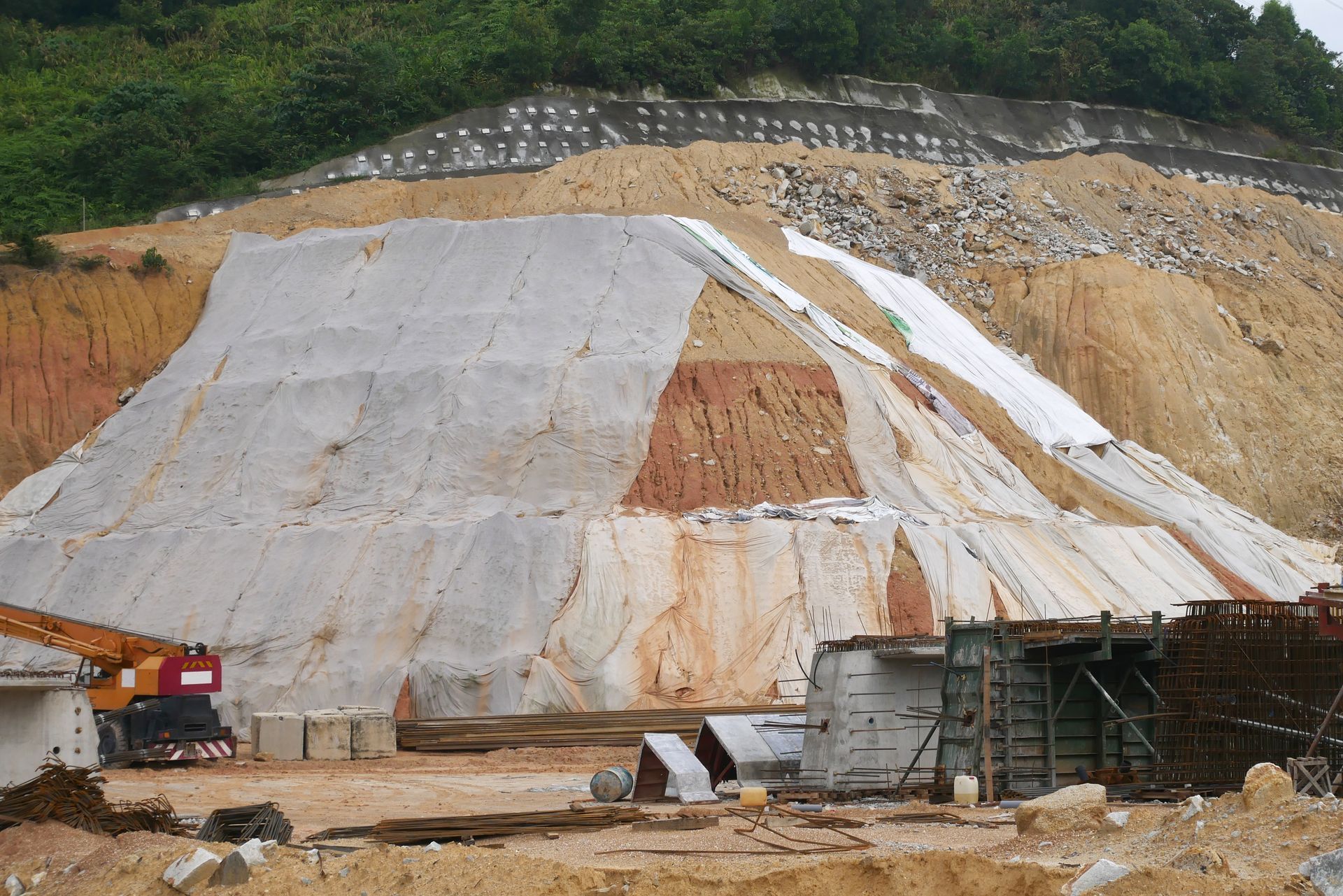
Exposed slopes lose soil with every heavy rain, carving gullies that grow deeper each season and pulling dirt away from the base of driveways, retaining walls, and building foundations. Erosion control work stabilizes these areas by changing how water contacts soil, slowing runoff speed, and anchoring the surface so it stays in place instead of washing downhill. The difference shows up immediately after the next storm—water still flows, but it no longer carries chunks of your property with it, and areas that used to show fresh washouts will remain intact.
Rock Solid Grading and Excavating applies erosion control methods across Rutherfordton and surrounding Western North Carolina locations where steep terrain and seasonal rainfall create ongoing soil loss. The work often combines grading adjustments to reduce slope angles, installation of water diversion features that break up long downhill runs, and stabilization treatments that protect bare soil until vegetation establishes. Properties with existing drainage problems usually need erosion control as part of the solution, since managing water flow and holding soil in place work together to protect the land.
Arrange an erosion evaluation to assess soil movement patterns and slope stability on your property.
How Erosion Control Addresses Soil Loss
The process starts with identifying where water gains speed as it moves downhill, because velocity determines how much soil gets picked up and carried away. Grading work can reshape severe slopes into terraced sections or gentler grades, and strategically placed berms or swales interrupt water's path, forcing it to slow down and spread out rather than concentrating into streams that carve channels. On slopes too steep to regrade, surface treatments like erosion control blankets or rip-rap hold soil while plant roots develop enough to anchor the hillside naturally.
Once the work is complete, you'll see that rain no longer leaves behind fresh ruts or exposes new sections of subsoil, driveways and walkways don't accumulate piles of washed-down dirt, and the land maintains its shape instead of gradually sliding toward lower areas. Vegetation grows more successfully because topsoil stays in place, and structures built near slopes no longer face undermining as the ground erodes away from their foundations.
Erosion control integrates with other site improvements—new driveways include measures to prevent edge washout, pond installations incorporate spillways that manage overflow without cutting channels, and grading projects finish with stabilization steps that protect the work. Each property requires a tailored approach based on slope steepness, soil type, and how much water volume the area handles during peak rainfall events.
Homeowners dealing with soil loss often wonder whether erosion can be stopped permanently or if it's something they'll fight continuously, especially in regions where terrain naturally creates these challenges.
Answers to Frequent Service Questions
What causes erosion to worsen over time if left unaddressed?
Each rain event removes a little more soil, which changes the slope's shape and creates channels that concentrate water flow, so instead of spreading across a wide area, runoff funnels into these paths and erodes even faster, carving deeper gullies with every storm.
How does erosion control protect structures and paved surfaces?
By stabilizing the soil around foundations, driveways, and retaining walls, the work prevents undermining—when erosion removes supporting earth from beneath or alongside these features, they crack, shift, or fail entirely, but held soil maintains structural support.
Why do Western North Carolina properties face more erosion challenges than flatter regions?
The combination of steep mountain terrain, heavy seasonal rainfall, and long downhill slopes gives water enough distance and gradient to build significant velocity, which translates directly into erosive force when it hits bare or poorly vegetated soil.
When should erosion control be added to a property?
Ideally before soil loss exposes roots, undercuts structures, or creates gullies—but even properties with existing damage benefit from stabilization that stops further loss and allows recovery, since erosion accelerates once it starts and becomes harder to control as damage deepens.
What's the difference between temporary and permanent erosion control?
Temporary measures like silt fencing and straw mulch protect disturbed soil during construction until final stabilization happens, while permanent solutions involve grading changes, engineered drainage, and vegetative or structural treatments designed to hold soil indefinitely under normal rainfall conditions.
Rock Solid Grading and Excavating works across properties in Rutherfordton and neighboring mountain communities where soil stabilization directly affects long-term land usability and structure protection. Contact us to review erosion patterns and discuss solutions tailored to your terrain.