Water Crossings That Prevent Road Damage
Culverts in Rutherfordton for properties with ditches, stream crossings, and driveway routes that intersect drainage paths
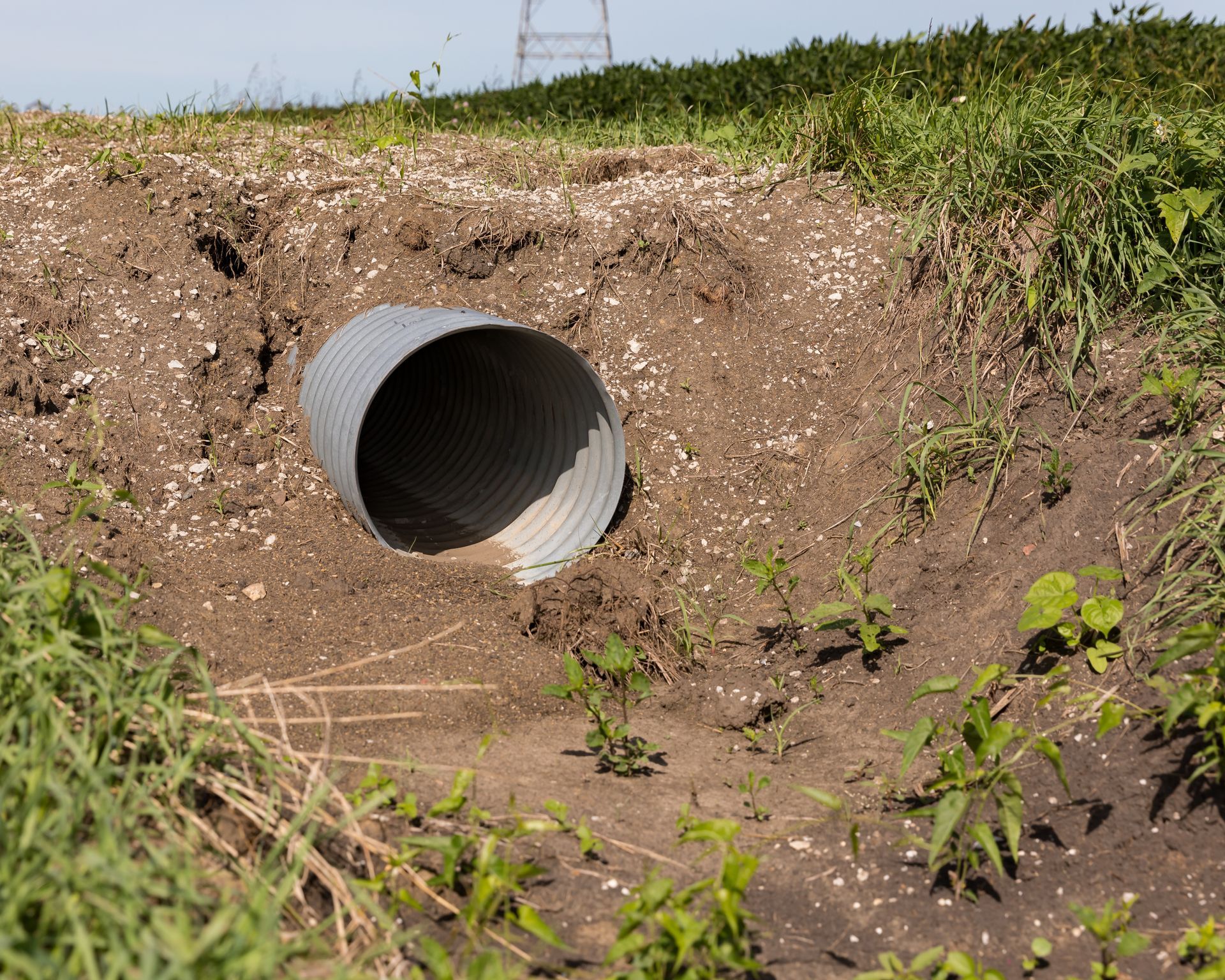
Blocking natural water flow creates flooding on one side and erosion on the other when runoff eventually finds a way through—culverts solve this by letting water continue its path underneath driveways, roads, and access routes. Rock Solid Grading and Excavating installs culverts in Rutherfordton by evaluating water volume during peak flow, sizing pipes to handle that capacity without overtopping, and placing them at grades that maintain drainage function year-round. Once installed, water moves through the crossing without washing out the driveway surface or pooling behind it, and you won't see erosion cutting around the edges where overflow tries to find alternate routes.
Installation involves excavating the crossing area to appropriate depth, bedding the culvert pipe on stable material so it won't settle or shift, and backfilling with compacted stone that supports traffic loads while allowing water to enter and exit freely. The pipe's diameter and length depend on how much water the drainage path carries during storms, and the inlet and outlet elevations must match existing ditch grades to prevent water from backing up or eroding at discharge points.
Arrange a consultation to determine proper culvert sizing and placement for your property's drainage crossings.
Why Proper Sizing and Placement Matter
Undersized culverts create bottlenecks—water backs up during heavy rain, floods across the driveway, and eventually erodes a new channel wherever resistance is lowest, which often means cutting directly through the road surface or washing out the shoulders. Sizing calculations account for watershed area, slope, soil type, and rainfall intensity, ensuring the pipe can handle peak flow without creating pressure that blows out the crossing or floods adjacent land.
After installation, you'll notice that rain no longer floods the low side of your driveway, ditches continue draining instead of overflowing, and the crossing stays intact through storm events that used to wash out sections and leave ruts. The driveway surface above the culvert remains stable because water flows beneath it rather than over or around it, and maintenance involves occasional clearing of debris from inlet screens rather than rebuilding washouts.
Culvert work often integrates with driveway installation or drainage system projects, since managing water movement across a property usually involves multiple components working together. Placement considers not just immediate function but long-term access—cleanout points allow debris removal without excavating, and proper slope prevents sediment accumulation that gradually reduces flow capacity.
Questions about culverts typically focus on how to prevent the failures people have seen on neighboring properties or experienced themselves after undersized or poorly placed installations wash out.
What Property Owners Usually Ask
What happens if a culvert is too small for the drainage it handles?
Water backs up behind the crossing during heavy flow, overtops the driveway, and erodes wherever it finds the path of least resistance—eventually cutting channels through or around the culvert that undermine the road structure and require complete rebuilding.
How do you determine the right size culvert for a specific location?
Engineers calculate based on the watershed area draining to that point, slope, soil infiltration rates, and expected rainfall intensity for the region—in Western North Carolina, that means accounting for mountain storm events that deliver high volumes quickly across steep terrain.
When should culverts be inspected or maintained?
Check inlets and outlets after major storms to clear accumulated debris, leaves, or sediment that can block flow, and inspect for signs of settling, pipe separation, or erosion around the ends—catching these early prevents failures that require full replacement.
Why do some culverts wash out while others last for decades?
Installation quality matters more than pipe material—culverts placed on unstable fill, without proper bedding, or at incorrect slopes fail quickly, while those set on compacted bases with adequate sizing and correct alignment continue functioning regardless of weather.
What's involved in culvert replacement versus new installation?
Replacement requires removing the failed pipe and often excavating more extensively to address whatever caused the original failure—soft soils, inadequate base, or poor grading—while new installations start with proper site preparation and avoid those problems from the beginning.
Rock Solid Grading and Excavating evaluates drainage crossings throughout Rutherfordton and surrounding areas, sizing culverts to match actual flow conditions rather than guessing at capacity. Call (828) 980-4820 to discuss your property's water management needs and schedule a site assessment.